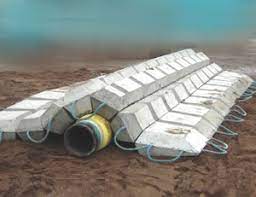
Subsea Crossing Protection with Geotextile Sand Bags
Subsea Crossing Protection with Geotextile Sand Bags
Effective Subsea Crossing Protection for Marine Infrastructure
Subsea crossings are critical components of modern marine infrastructure, connecting pipelines, cables, and other utilities beneath waterways and coastal environments. These installations can be exposed to currents, waves, seabed movement, erosion, and scour, making reliable protection essential for long-term stability and performance.
Geotextile sand bags provide a flexible and cost-effective solution for subsea crossing protection. They can be used to stabilize vulnerable seabed areas, reduce erosion, and provide additional protection and support around underwater infrastructure.
What Are Geotextile Sand Bags?
Geotextiles are permeable polypropylene or polyester fabrics engineered to filter, separate, protect, reinforce, and drain soil selectively. Their combination of strength, permeability, and flexibility makes them suitable for demanding applications in the construction, marine, petrochemical, and quarrying industries.
Geotextile products are commonly used in embankments, retaining structures, reservoirs, canals, dams, riverbanks, and coastal protection projects.
For subsea applications, geotextile sand bags can be filled with sand or suitable aggregate and strategically placed around vulnerable areas to create protective structures.
Geotextile Sand Bags for Subsea Crossing Protection
Subsea crossings may be vulnerable to seabed erosion and scour, particularly where water flow changes direction or velocity around the crossing. Geotextile sand bags can help stabilize the surrounding seabed and reduce the movement of soil and sediment.
They may be used to:
Protect subsea pipeline crossings
Stabilize the seabed around underwater infrastructure
Reduce erosion and scour
Provide pipeline ballast and additional stability
Protect crossing areas from hydraulic forces
Support coastal and marine construction projects
Create flexible protective barriers around vulnerable areas
The flexible nature of geotextile sand bags allows them to conform to the seabed profile and accommodate variations in underwater terrain.
Geotextile Grout Bags and Concrete Mattresses
For applications requiring a more substantial protective layer, geotextile grout bags and concrete mattresses can provide additional subsea crossing protection.
These systems are manufactured from double-layer, high-strength polyester and polyamide fabrics. They are supplied in different sizes and incorporate filling vents for efficient installation. Concrete is pumped through the vents, while excess water is expelled through the fabric pores, retaining the concrete within the mattress.
Once cured, the concrete-filled mattress creates a durable and flexible protective layer that can help protect subsea infrastructure against erosion, scour, and seabed instability.
Typical applications include:
Subsea pipeline protection
Pipeline ballast and stabilization
Subsea crossing protection
Erosion and scour control
Bank and slope stabilization
Coastal protection
Underwater concrete formwork
Sand Bags for Marine and Coastal Protection
Sand bags offer a cost-effective approach to shoreline and marine armoring. They can be stacked to create stable protective structures that help reduce the impact of waves, currents, and coastal erosion.
When incorporated into a properly engineered subsea protection system, geotextile sand bags can help reinforce the seabed around crossing locations and reduce the risk of soil displacement.
Advantages of Geotextile Subsea Protection
Geotextile protection systems offer flexibility and permeability, making them well suited to underwater environments. They can allow controlled water movement while helping contain fill material and stabilize surrounding soil.
Depending on project requirements, geotextile sand bags and concrete mattresses can be used individually or as part of a comprehensive subsea protection system.
The appropriate solution should be selected based on water depth, current and wave conditions, seabed characteristics, scour potential, crossing configuration, and the required service life.
Reliable Subsea Crossing Protection Solutions
Protecting subsea crossings is essential for maintaining the stability and integrity of underwater infrastructure. Geotextile sand bags, grout bags, and concrete mattresses provide versatile options for protecting pipelines and other subsea installations from erosion, scour, and seabed movement.
If you require a practical and durable solution for subsea crossing protection, geotextile products can be designed and installed to suit the specific requirements of your marine project.
Subsea Crossing Protection with Geotextile Sand Bags